Trump’s Backup Plan To Stop Birthright Citizenship Leaks

Following the Supreme Court’s decision striking down President Donald Trump’s executive order on birthright citizenship, administration officials and several prominent conservative allies have shifted their attention toward new proposals aimed at limiting birth tourism and tightening entry rules for pregnant foreign visitors.
The Supreme Court of the United States ruled Tuesday that Trump’s executive order restricting automatic citizenship for children born in the United States was unconstitutional. In response, some supporters of the administration argued that future efforts should focus on preventing individuals from entering the country for the purpose of giving birth rather than attempting to alter birthright citizenship through executive action.
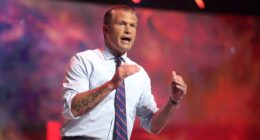
Among those advocating for a tougher approach was Sean Davis, who suggested barring pregnant foreign nationals from entering the United States. Senior White House adviser Stephen Miller also said the administration should closely examine temporary admissions policies, arguing that children born to non-citizens automatically receiving U.S. citizenship creates long-term legal and financial implications.
White House spokesperson Abigail Jackson said President Donald Trump remains committed to protecting the value of American citizenship and has directed Congress to pursue legislative solutions following the Court’s ruling. She also said the U.S. Department of Justice will increase its focus on investigating birth tourism operations.
Birth tourism generally refers to foreign nationals traveling to the United States primarily to give birth so their child acquires U.S. citizenship at birth. While federal officials do not maintain official statistics on the practice, outside estimates suggest between 20,000 and 26,000 children are born annually to foreign visitors, compared with roughly 3.6 million births nationwide in 2025.
The Justice Department also issued new guidance encouraging federal prosecutors to pursue criminal cases involving birth tourism schemes when evidence supports violations of existing law. Assistant Attorney General Colin McDonald said many of these cases begin with false statements on visa applications regarding the purpose or duration of travel to the United States.
According to the guidance, prosecutors should consider charges that may include visa fraud, wire fraud, health care fraud, money laundering, and aggravated identity theft when investigating organized birth tourism operations.
Although President Trump has not publicly endorsed a blanket ban on pregnant foreign visitors, his administration previously targeted birth tourism during his first term through tighter visa enforcement and additional scrutiny of applicants suspected of traveling to the United States primarily to give birth.
Following the Supreme Court ruling, Trump also referenced the issue on social media, posting a message that sarcastically congratulated Chinese President Xi Jinping while criticizing the Court’s decision on birthright citizenship.
The debate is expected to continue as the administration and congressional Republicans explore legislative and regulatory options following the Court’s ruling, with immigration and citizenship policies likely to remain central issues in Washington.