An unauthorized aircraft entering restricted airspace near President Donald Trump’s visit

An unauthorized aircraft entering restricted airspace near President Donald Trump’s visit to South Carolina triggered a swift military response, with an F-16 fighter jet dispatched to intercept the plane as presidential security operations were underway.
The incident occurred Wednesday, October 21, near Clemson, South Carolina, where Trump was scheduled to appear at a campaign rally ahead of the November midterm elections.
According to the North American Aerospace Defense Command (NORAD), an F-16 intercepted the civilian aircraft at approximately 5:39 p.m. after it entered restricted airspace in the Clemson area. The response came just minutes before Air Force One arrived at Greenville-Spartanburg International Airport at approximately 5:46 p.m.
Military officials said the civilian plane eventually landed safely at a nearby airfield while remaining under NORAD surveillance. Authorities did not publicly identify the pilot or indicate that the incident involved a deliberate attempt to threaten the president.
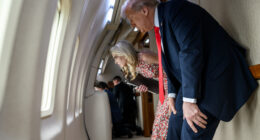
Trump continued with his scheduled visit despite the airspace violation. After landing, he departed Air Force One and boarded Marine One, which transported him to the area near Clemson University’s T. Ed Garrison Arena. The helicopter arrived at approximately 6:33 p.m., and the president later addressed supporters at the rally.
The incident highlighted the extensive precautions taken whenever the president travels to public events. Presidential visits often involve temporary flight restrictions established by the Federal Aviation Administration (FAA), limiting where civilian aircraft can operate around designated locations and during specific time periods.
These restrictions are intended to protect the president, government officials and members of the public attending large gatherings. Pilots are responsible for checking applicable flight notices before taking off and ensuring their routes comply with any active restrictions.
When an aircraft enters protected airspace without authorization, NORAD can dispatch military aircraft to investigate the situation. Fighter pilots may attempt to establish contact with the civilian pilot, signal that a violation has occurred and direct the aircraft away from the restricted area.
In this case, the F-16 monitored the aircraft until it landed safely. Officials did not report any injuries or property damage connected to the incident.
Following such encounters, NORAD reminds civilian pilots that they must respond promptly when intercepted by military aircraft. Pilots are expected to establish communication through designated emergency aviation frequencies, follow instructions from military personnel and leave restricted airspace as directed. Violations can lead to questioning by federal authorities and potential enforcement action, depending on the circumstances.
Officials had not publicly disclosed whether the pilot involved in the South Carolina incident would face penalties.
The interception also followed a separate incident involving Trump’s campaign travels. On October 17, NORAD fighter aircraft responded to a civilian plane that entered temporary restricted airspace near Cincinnati, Ohio, while the president was attending a rally at Northern Kentucky University. Military aircraft escorted that plane away from the protected area.
Similar airspace violations have occurred during other presidential appearances around the country. Although an unauthorized flight does not necessarily indicate hostile intentions, military officials must respond quickly because they cannot immediately assume that an unidentified aircraft poses no danger.
The South Carolina incident came as Trump stepped up his appearances ahead of the November 3 midterm elections. His visit was intended to support Republican Senate candidate Darline Graham, who was facing Democrat Annie Andrews in a closely watched contest.
With control of Congress at stake, the president’s campaign schedule has become an important part of Republican efforts to maintain their congressional majorities. Each appearance requires coordination among federal security personnel, military authorities, aviation officials and local law enforcement.
The Secret Service is responsible for protecting the president, while NORAD monitors and responds to potential airborne threats within its area of responsibility. The FAA also plays a critical role by establishing and communicating flight restrictions around designated events.
The latest interception demonstrated how quickly those security procedures can be activated when an aircraft enters protected airspace. An F-16 was dispatched, the civilian plane landed safely, and Trump’s campaign appearance proceeded as planned.
No deliberate threat against the president was publicly identified in connection with the incident. Nevertheless, the episode underscored the challenges of protecting a president who regularly travels to crowded public events while maintaining strict control over the airspace surrounding those locations.