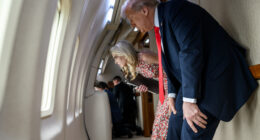
Trump Furious After Shocking Secret Service Lapse

Watchdog Report Finds Secret Service Mobile Device Practices Created Security Risks
A new federal watchdog report has found that weaknesses in the U.S. Secret Service’s mobile device policies exposed sensitive communications to potential cybersecurity threats, raising concerns about the protection of government officials and other individuals under the agency’s protection.
The report, issued by the Department of Homeland Security’s Office of Inspector General, concluded that many Secret Service employees routinely relied on personal smartphones to conduct official business because government-issued devices often lacked critical communication capabilities needed in the field.
According to investigators, the agency’s process for selecting and deploying mobile technology did not fully meet operational demands, prompting agents to use unsecured personal devices to exchange information. The report warned that this practice increased the risk that sensitive communications could be intercepted or exploited by foreign adversaries or cybercriminals.
The findings were part of a broader review launched after the attempted assassination of President Donald Trump during a campaign event in Butler, Pennsylvania. During that investigation, officials learned that some agents had relied on personal phones to coordinate with local law enforcement because their government-issued devices lacked important communication functions.
One example cited in the report involved an agent who used a personal phone to receive a photograph from a local police officer identifying suspected gunman Thomas Matthew Crooks. According to the report, the agent said the government-issued phone was unable to receive image messages, leaving no practical alternative during the incident.
Investigators also found that similar issues occurred during overseas assignments, where government-issued devices reportedly struggled to communicate with foreign law enforcement and security partners. As a result, personnel frequently turned to personal phones to complete mission-related tasks.
The Inspector General warned that personal devices are not managed or secured by the Secret Service, making them more vulnerable to hacking, malware, outdated software, and unauthorized surveillance. The report noted that compromised devices could expose sensitive communications, reveal employee locations, or provide malicious actors with access to protected information.
Beyond cybersecurity concerns, the report also stated that using personal devices for official communications could create compliance issues with federal records laws, which require government communications to be properly preserved and documented.
The Secret Service agreed with all of the report’s recommendations and said it has already begun implementing improvements to its communications systems. Agency officials indicated that government-issued phones now support approved encrypted messaging applications, including WhatsApp and Signal, to provide agents with more reliable communication tools.
Secret Service Director Sean Curran said the agency has made substantial changes to its communications policies and technology in an effort to strengthen security, reduce vulnerabilities, and better protect government officials, employees, and other individuals under Secret Service protection.