
Trump To Make Himself What If Dems Win?
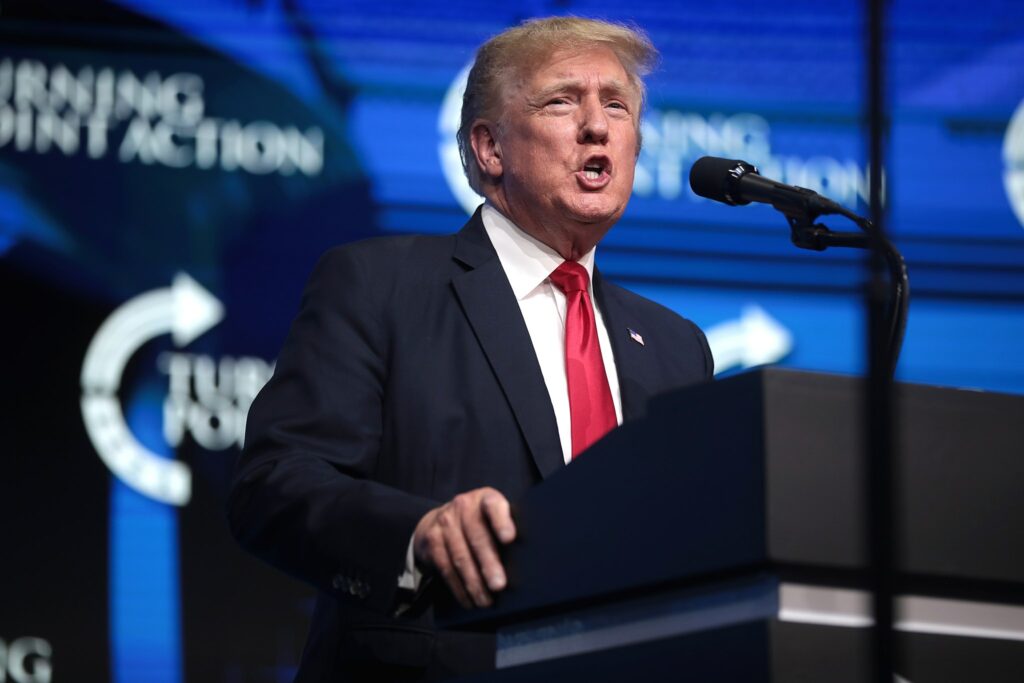
President Donald Trump is warning that a Democratic takeover of Congress could bring a wave of presidential vetoes, declaring that he would reject legislation sent to his desk if Republicans lose control of the House and Senate in the midterm elections.
During an interview Monday on the New York Post’s Pod Force One podcast with host Miranda Devine, Trump expressed confidence that Republicans would hold onto their congressional majorities. However, he acknowledged that he was prepared for a very different political situation if Democrats emerge victorious.
Trump said he could effectively turn the presidency into a veto operation if Democrats gain control of both chambers. Under that approach, Democratic lawmakers could pass legislation, only to see the president reject it repeatedly until both sides eventually attempt to negotiate an agreement.
He suggested that after several weeks or months of failed legislative efforts, Democrats might recognize that continuing the confrontation was unproductive and approach the White House to work out compromises.
Despite the warning, Trump maintained that he expects Republicans to perform well and hopes the scenario never becomes reality.
Behind the scenes, however, the White House has reportedly been preparing for the possibility that Democrats could take control of Congress. Administration officials have spent months examining ways to continue implementing Trump’s agenda even if congressional support disappears.
Among those involved in the planning are Deputy Chief of Staff Stephen Miller and budget director Russell Vought. Their work reportedly includes identifying actions the president could legally take without congressional approval, determining where executive authority could be pushed further and preparing legal arguments to defend those decisions if they face court challenges.
The preparations reflect an approach that has become increasingly important during Trump’s second administration, with the White House relying heavily on executive orders and presidential authority to advance its priorities.
Congress has also had a relatively limited legislative record during the current session. Since January 2025, the 119th Congress has approved 121 laws, placing it among the least productive congressional sessions over the past four decades, according to research from the Pew Research Center.
Democrats have made clear that a change in congressional leadership would bring a much more aggressive approach toward the administration. Party leaders have discussed launching investigations into several areas, including the Trump family’s business interests and the administration’s handling of the conflict with Iran.
Some prominent Democrats have also raised the possibility of impeachment proceedings involving Trump and Defense Secretary Pete Hegseth.
A Democratic majority would give the party considerable influence over congressional investigations, legislation and the confirmation process for presidential nominees. Democrats could block Trump’s judicial and executive branch appointments, potentially including future Supreme Court nominations.
Lawmakers could also attempt to terminate national emergencies declared by Trump, which have provided the administration with additional authority to take certain actions without passing new legislation. However, the president could veto congressional efforts to end those declarations, meaning opponents would need a two-thirds majority in both chambers to override him.
The balance of power remains particularly important because Republicans currently hold relatively narrow majorities. The House stands at 218 Republicans to 214 Democrats, while the Senate is divided 53 to 47 in favor of Republicans. Democrats would need a net gain of four seats in each chamber to take control.
Polling suggests Democrats have a stronger opportunity to flip the House, while the Senate contests remain considerably more uncertain.
Trump repeated his willingness to use the veto power when asked about the possibility of losing congressional control. He said he would reject legislation coming from a Democratic-led Congress but believes negotiations would eventually follow.
The president also addressed speculation about whether he would consider seeking another term in office. Trump again expressed enthusiasm about the possibility of running for president a third time, although he acknowledged that the Constitution presents a significant obstacle.
The 22nd Amendment limits presidents to being elected to two terms. Trump said he would welcome another opportunity to run if it were legally possible, but added that there is still substantial time remaining in his current presidency.
He pointed to his administration’s record and expressed confidence in the direction of the economy, arguing that there is plenty more he wants to accomplish before leaving office.
The possibility of losing congressional control would not be unprecedented. Several previous presidents have faced situations in which their political parties lost both the House and Senate during their time in office.
Ronald Reagan, Bill Clinton, George W. Bush and Barack Obama all experienced periods when the opposing party controlled both chambers. Despite those setbacks, each administration managed to secure significant legislative victories.
Clinton, for example, signed major welfare reform legislation and the Telecommunications Act in 1996. Bush approved the Energy Independence and Security Act in 2007, while Obama later signed several major measures, including the Every Student Succeeds Act, transportation legislation and the USA Freedom Act.
Trump himself experienced a similar political setback during his first presidency when Democrats captured the House in the 2018 midterm elections. Republicans, however, expanded their Senate majority during that same election cycle.
For the current administration, the midterm results could determine how much of Trump’s remaining agenda can move through Congress. A Republican victory would allow the president to continue working with a friendly legislature, while a Democratic takeover could lead to investigations, confirmation battles, legislative gridlock and an increasingly confrontational relationship between Capitol Hill and the White House.